Downspouts & Drainage Solutions in Aledo, TX
Gutters collect the water. Downspouts and drainage decide where it ends up — and on Parker County clay, that decides what happens to your foundation.

The Last Six Feet Matter Most
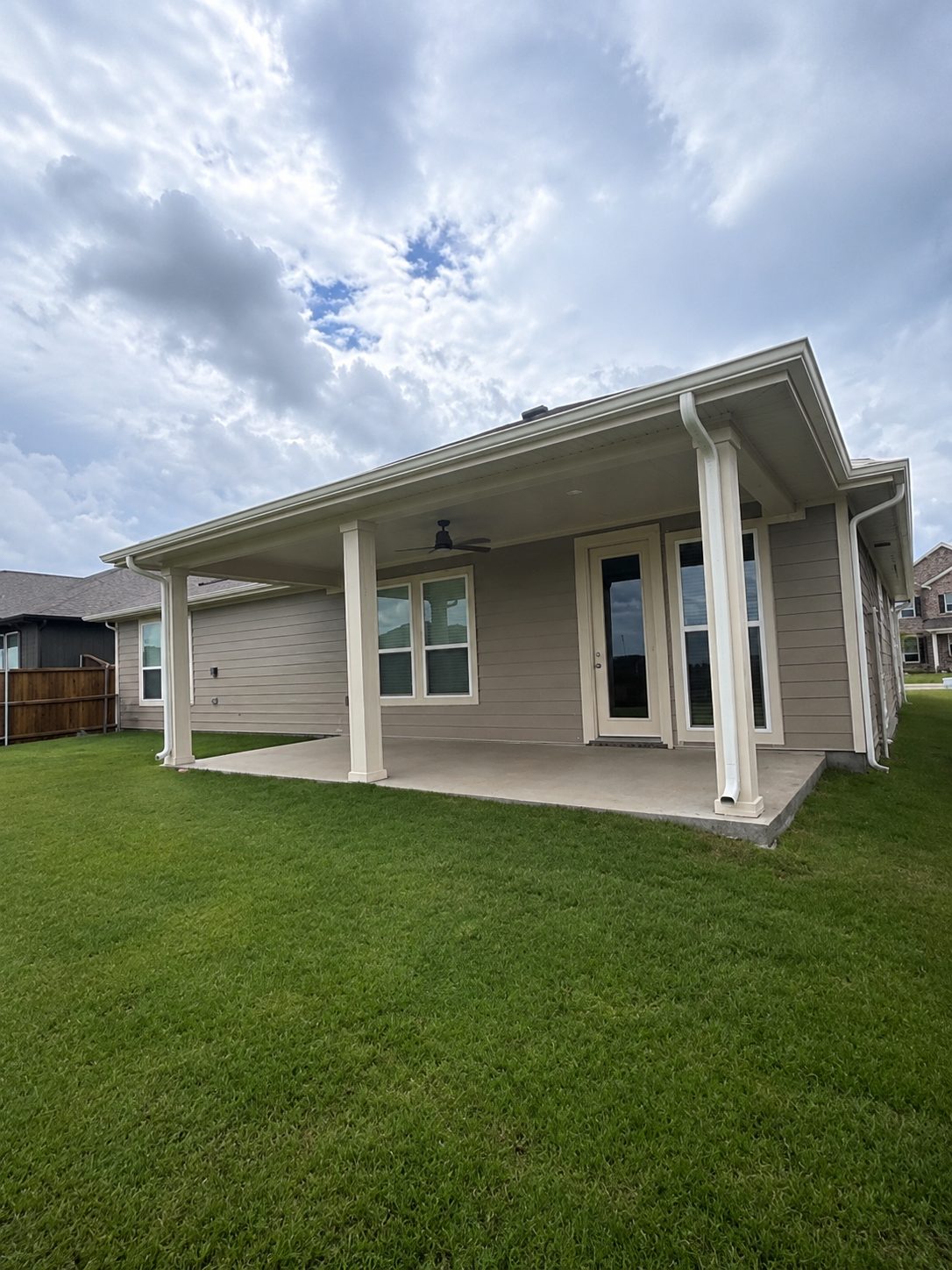
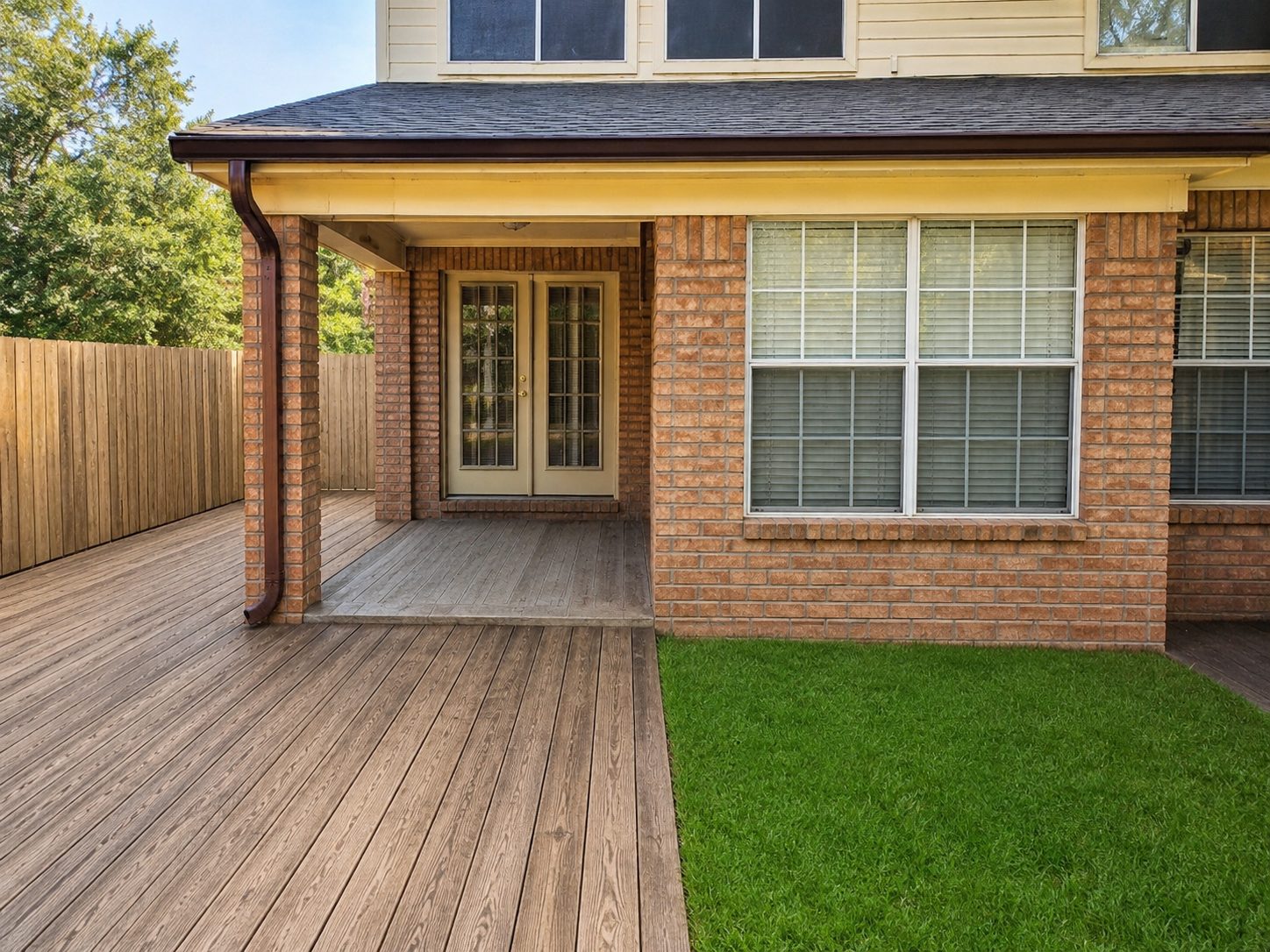
A well-installed gutter that dumps its downspout right at the corner of the slab hasn't solved anything; it's concentrated a whole roof plane's worth of water on one spot. On expansive clay, that spot swells while the rest of the perimeter stays dry, and differential movement is exactly what cracks slabs, brick veneer and drywall. The downspout, the extension, and where the water finally goes are the part of the job most people never think about — and the part that protects the house.
Downspout Placement and Sizing
Every downspout drains a section of gutter, and each one has a limit. A standard 2x3-inch downspout handles about 600 square feet of roof; a 3x4-inch downspout handles roughly 1,200. Long runs with a single downspout at one end are the classic overflow setup on Aledo's big new-construction rooflines. Our fixes:
- Add downspouts so no section of gutter is carrying more roof than it can drain — typically one every 30 to 40 feet of gutter.
- Upsize to 3x4 on big roof planes, valleys and metal roofs. A 3x4 moves twice the water and clogs far less because leaves pass through.
- Relocate downspouts that dump onto walkways, AC pads, patios, or a neighbor's fence line.
- Strap and seal — downspouts strapped every 6 feet, elbows riveted and sealed so they don't separate in a windstorm.
Getting Water Away From the House
Splash blocks and extensions
The minimum. A splash block throws water 2 feet out; a hinged or rigid extension gets it 4 to 6 feet, which is the accepted minimum for foundation protection on level ground. We use hinged extensions on lawn edges so they flip up for mowing.
Underground drain lines
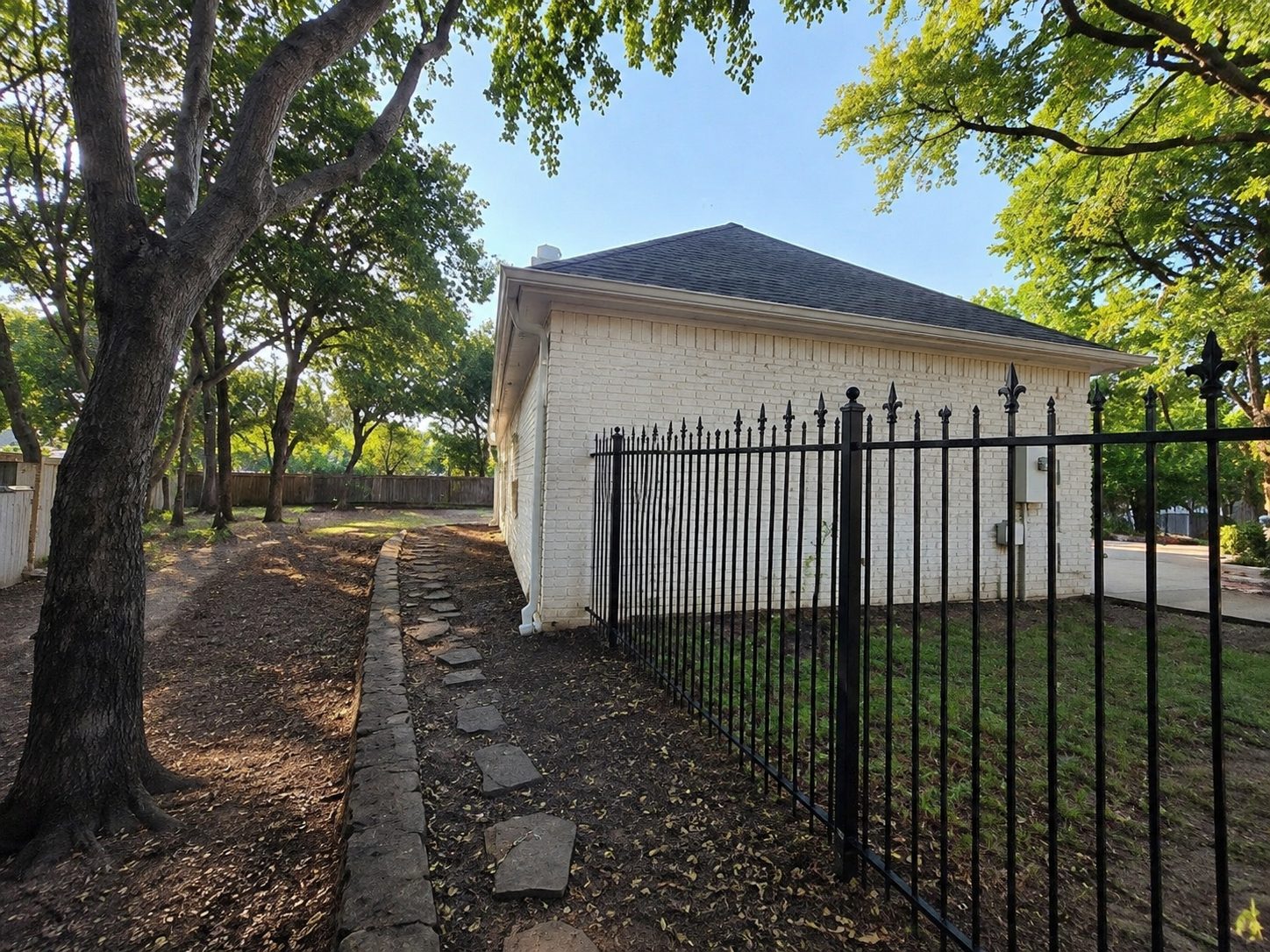
The right answer for most Aledo lots, and the one that keeps flowerbeds, walkways and patios dry. Each downspout connects through a debris catch to a buried 4-inch solid PVC or corrugated line that runs to daylight — a curb core, a swale, a creek easement, or a pop-up emitter at the low side of the yard. The trench is closed and the sod goes back, and from the street all you see is the downspout going into the ground.
Catch basins and channel drains
Where a patio, pool deck or driveway ponds during a storm, a surface catch basin or a channel drain across a walkway ties into the same underground system, so the whole back yard drains through one outlet.
Rain barrels and diverters
For gardeners we can set a downspout diverter into a rain barrel with an overflow that routes back to the drain when the barrel's full.
Drainage for Patio Covers, Pergolas and Additions
Our parent company, CertiPro Home Improvement, builds aluminum patio covers, screen rooms and pergolas across the west side of the Metroplex. Every solid-roof cover needs its own gutter and downspout, and it needs to tie into the house drainage — otherwise the cover simply moves the water problem 12 feet further into the yard. We design the gutter and drainage for our own covers, and we'll fix the drainage on covers someone else built.
What a Drainage Visit Looks Like
- Walk the perimeter after (or during) a rain if we can. Where's the water pooling? Where's the soil eroded? Which downspouts are dumping at the slab?
- Map the outlets. Where can water legally and practically go — curb, swale, easement, low corner?
- Written plan and price. Downspout changes, line routes, emitters, basins — drawn on a sketch of the lot so you know exactly what's going where.
- Install, restore, test. Trench, pipe, connect, backfill, replace sod, and run the hose on every downspout.